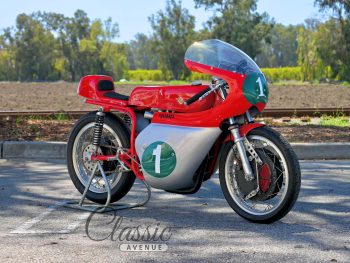
With indelible images of London’s Ace Café, marriages of engine and frame to garner the best of both elements for thrill-seeking youths gambling on races from one roadside café to another on the A406 North Circular Road gained popularity. The Triton was the most common with Triumph power mounted in Norton’s fine handling featherbed frame. But the ultimate had to be the Norvin, with Vincent 1000cc Rapide power in that same, Isle of Man-winning frame, to produce the definitive crotch-rocket of the day.
The motorbike offered
This 1949 Norvin 1000cc Café Racer consists of a 1960 Norton “Wideline” Featherbed frame with Norton Manx style front forks, and the triple clamps that are smooth aluminum like the factory race bikes, with a Manx-style wingnut steering damper. The abbreviated fenders and clip-on handlebars are aluminum, as are the brake and clutch levers, which appear to be Italian Tomasellis. Stopping comes courtesy of the 210mm Yamaha TZ racing brakes, which are double-sided, twin-leading-shoe up front and twin-leading shoe out back, meaning this machine has the capability of moving very quickly, handling beautifully and stopping from very high speeds with aplomb. And at its heart is a 1-liter, 1949 Vincent Rapide engine. Painted black for the menacing look of the Black Shadow, the engine was completely rebuilt with modern performance camshafts, flat-slide carburetors, a modern clutch and an electronic ignition. The 2-into-1 exhaust system uses a Dunstall Decibel-type tuned megaphone exhaust with modest baffles to avoid too much police attention.
The combined fuel/oil tank is fiberglass and held down by an aluminum strap with an over-center latch at the front of the fiberglass humped seat, where a notch makes for easy access for removing the tank with its twin Monza fillers. The speedometer is a modern GPS item powered by a 12-volt alternator system, which also runs the Lucas headlamp and classic Vincent-style Lucas “stop” lamp.
Having been on static display in the MotoTalbott Museum in Carmel, California for some time, the bike has been re-commissioned to ready it for sale, but further fettling may be necessary before returning it to regular use.